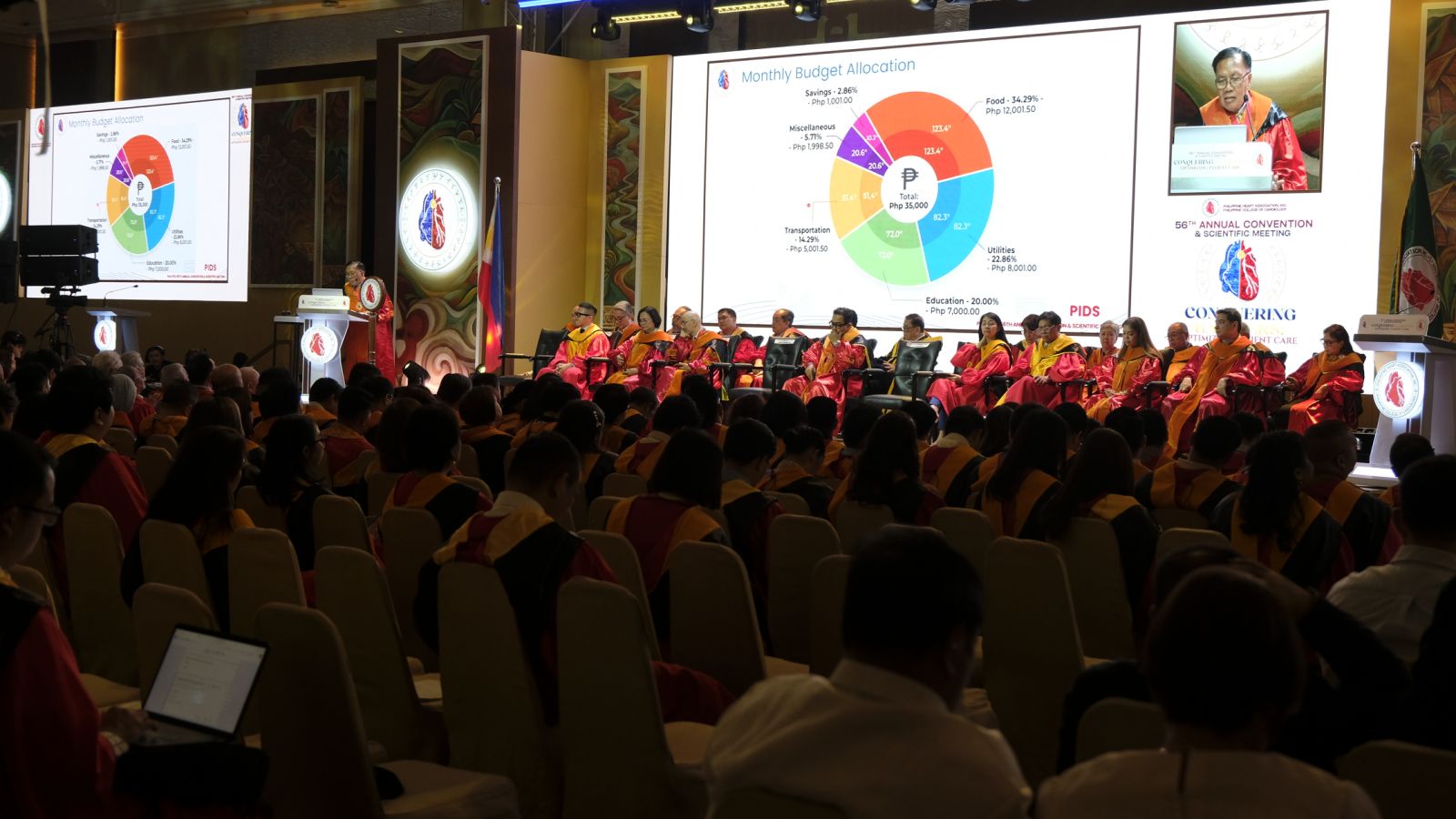
MANILA — The Philippines continues to face a major shortage of cardiac healthcare resources as cardiovascular diseases remain the country’s leading cause of death for more than 50 years, according to data presented at the opening of the Philippine Heart Association (PHA) 56th Annual Convention and Scientific Meeting on Tuesday, May 26, 2026.
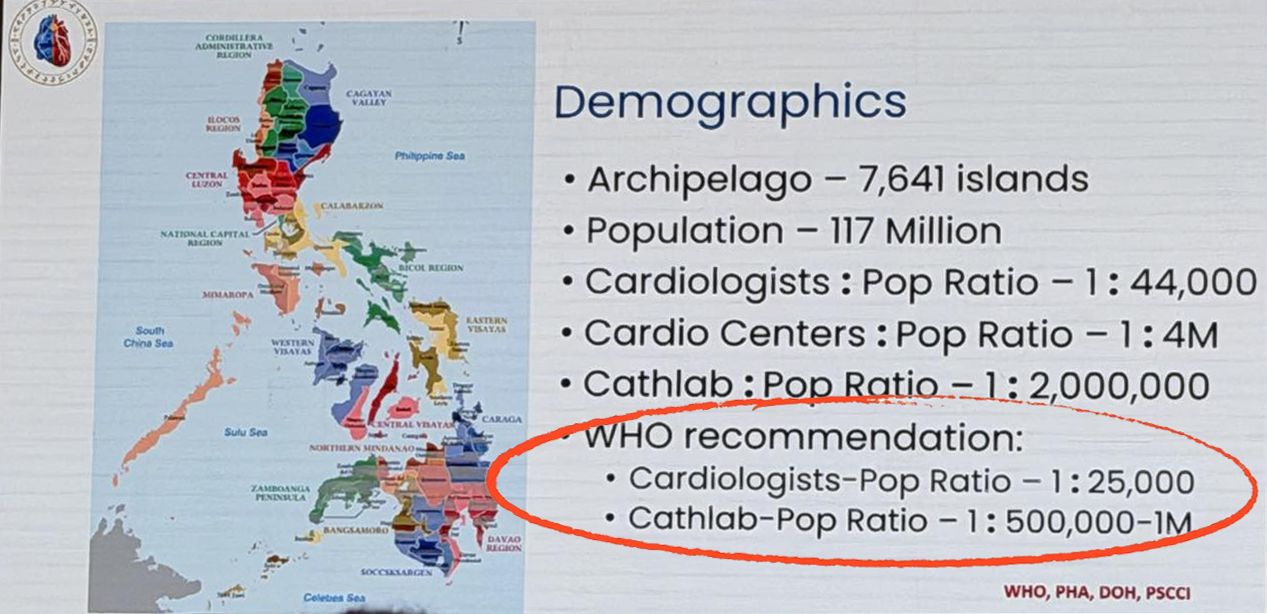
PHA's 2026 Mariano Alimurung Lecturer and Keynote Speaker Dr. Joel Abanilla noted that the country’s healthcare system remains below World Health Organization (WHO) benchmarks for cardiologists, cardiac catheterization laboratories (cath labs), and specialized heart centers despite a population of about 117 million spread across 7,641 islands.
“Just from these numbers, you can already see the problem,” Dr. Abanilla told PHA fellows, associate fellows and diplomats during the Convocation ceremonies.
He cited that there is only one cardiologist for every 44,000 Filipinos, below the WHO-recommended ratio of one for every 25,000 people.
The country also has one cath lab for every 2 million Filipinos, four times lower than the WHO-adjusted target of one cath lab for every 500,000 population.
"But this is a very generous estimate. This was adjusted to our geography and economics. Ideally, it should be lower. It should be," Dr. Abanilla said, emphasizing that cath labs are critical in treating patients experiencing heart attacks by clearing blocked arteries.
About 85 percent of the country’s 93 active cath labs are located in Luzon. The Visayas has 17 cath labs while Mindanao has 13.
Abanilla pointed out that most cath labs are located in private hospitals, creating financial barriers for many Filipinos seeking specialized heart care.
“And that is the painful truth, most of these cath labs are in private hospitals and heavily concentrated in the National Capital Region,” the speaker said.
Cardiovascular diseases, including ischemic heart disease and stroke, continue to top mortality statistics nationwide.
Ischemic heart disease caused more than 134,000 deaths last year, while cerebrovascular diseases, diabetes mellitus, hypertension, and other cardiac conditions also contributed heavily to mortality rates.
“Taken together, they comprise more than 50 percent of the total deaths each year,” Abanilla added.
Cardiac specialists, who are expected to ease the country’s burden of cardiovascular diseases, are also distributed unevenly nationwide.
Based on 2025 PHA data, the country has 2,545 cardiologists, with about half concentrated in Metro Manila.
Including nearby provinces such as Laguna, Cavite, Pampanga, and Bulacan, about 52 percent of cardiologists are located within the National Capital Region and surrounding areas.
Abanilla also cited the latest data from the Philippine Heart Center, which showed that around 54 percent of its graduates—including cardiologists, pediatric cardiologists, thoracic and cardiovascular surgeons, pulmonologists, and cardiac anesthesiologists—practice in Metro Manila and nearby provinces.
The country’s highly specialized cardiac workforce includes 287 pediatric cardiologists, 244 invasive cardiologists, 211 thoracic and cardiovascular surgeons, and 153 cardiothoracic anesthesiologists.
With these, he underscored the need to expand cardiac healthcare services outside Metro Manila to improve access to life-saving treatment and address the country’s growing burden of cardiovascular diseases.