Philippine Society of Vascular Medicine (PSVM)

Date Released: April 12, 2020

The world today is in turmoil. The COVID-19 pandemic has engulfed the whole world in the wake of this silently raging onslaught. It has created worry and unpredictable challenges among health care providers and in the health care systems. The medical crisis continuously causes morbidity and mortality threats to overwhelming proportions. Up to this moment, no immediate cure or panacea has been discovered. This makes the battle against COVID-19 a very desperate struggle. However, the medical and scientific sectors in collaboration with the government authorities, have pooled their best collective efforts to device certain safety measures and protocols to contain and lessen the spread of the virus, and to look for the best possible therapeutic intervention to ultimately put an end to this pandemic. We, in our society can do no less. Hopefully we can prove ourselves worthy and equal to this critical challenge.

The Philippine Society of Vascular Medicine (PSVM) has developed safety protocols and guidelines on the approach to vascular procedures and treatment interventions, with the hope of mitigating the spread of infection and ensuring safe and efficient health care delivery in the midst of this pandemic.

PSVM Guidance consists of two parts, namely:

  1. Anticoagulation and COVID-19
  2. Safety protocols and guidelines during COVID-19 pandemic

Disclaimer on the recommendations

  • These should not be considered as rigid guidelines and are not intended to supplant clinical judgement or the development of consensus regarding institutional approaches to treatment. There is a great deal of uncertainty around this evolving pandemic and information may change
  • It is possible that some of the strategies outlined in this document may in time be replaced as our understanding of the unique challenges that COVID-19 poses in each country or locality


Role of Anticoagulation in COVID-19: Recommendations on its use


COVID-19 patients are at risk for VTE especially the critically-ill and those with high Padua prediction scores, where the incidence can be as high as 20%1. Additionally, admitted COVID-19 patients can develop coagulopathy (COVID-associated coagulopathy or CAC) that is associated with high mortality. Ning Tan and others reported lower mortality rates in those who received prophylactic dose anticoagulation against those who did not.2,3  This benefit may not only have resulted from prevention of VTE and mitigation of pulmonary microthrombosis,4 but also by abatement of pulmonary inflammation and fibrosis due to the anti-inflammatory properties of heparin5,6 [which may be an added benefit in COVID infection where proinflammatory cytokines are markedly increased7].


Therefore, based on the available evidence and expert opinion, we make the following recommendations:


1)            We suggest initiation of anticoagulation using prophylactic dose heparin on admission (or at any time during the hospital course) if ANY of the following are present: (Please see Appendix A for the algorithm)

  1. International Society of Thrombosis and Hemostasis( ISTH) criteria8,9: D-dimer

> 2ug/ml, ± prolonged protime, ± platelet < 100 x 109/L

  1. PADUA score of ³ 4 (Appendix B) 1
  2. Sepsis-induced coagulopathy (SIC) score of ³ 4 (Appendix C) 2
  3. Critically ill (admission to ICU requiring mechanical ventilation or FiO2 of 60% or higher)1

*Recommended dose as follows11-15:


Enoxaparin

Unfractionated Heparin (UFH)

Patient's weight                     <80 kg 80-120 kg

>120 kg

40 mg SC OD

60mg SC OD

80mg SC OD

5,000 u SC Q8H or Q12H

(for all weight categories)

Creatinine Clearance (CrCl) ³ 30 ml/min

15-29ml/min

<15ml/min

as above (according to patient's weight)

20 mg SC not indicated

5,000 u SC Q8H or Q12H

5,000 u SC Q8H or Q12H

5,000 u SC Q12H

*           For patients with acute kidney failure, end stage renal disease, dialysis dependent or conditions where eGFR may be inaccurate, unfractionated heparin (UFH) is more preferred.


  • While Fondaparinux has been suggested as a non-heparin anticoagulant that may be used as an alternative in heparin-induced thrombocytopenia (HIT)21, there are presently no data on its use specifically in COVID-19 patients.
  • It is reasonable to shift patients maintained on NOACS before admission, to LMWH or UFH and follow the appropriate dosing and shifting guide- lines,22 since there are no available data as yet on the use of NOACS in COVID-19.
  • Contraindications to prophylactic-dose anticoagulation include8:
    • Platelet count < 25 x 109/L
    • Active bleeding

*abnormal PT or APTT is not a contraindication

  • For those with contraindications to pharmacologic anticoagulation, use mechanical prophylaxis13 in patients who are critically-ill or with Padua score of ³ 4, using in this order of preference: intermittent pneumatic compression device (IPC), thigh-high or knee-high graduated compression stockings (GCS)16 which provides at least 18 mmHg ankle pressure17.
  • We suggest routine determination of D-dimer, Prothrombin Time and Platelet Count in all PUI/COVID -19 patients, on admission8. This may help to stratify patients who may need close monitoring or not. These tests are repeated every 2-3 days thereafter (or more frequently if with rapid clinical deterioration) to identify worsening coagulopathy. Any underlying condition (e.g. liver disease) or medication (e.g. anti-platelets) which may alter the parameters and potentially increase the bleeding risk should be taken into

3)            We suggest to discontinue anticoagulation in the following scenarios:

  1. Platelet count ≤ 20 x 109/L in non-bleeding patients8
  2. Platelet count ≤ 50 x 109/L an PT ratio ³ 5 (not the same as INR) in bleeding patients8
  3. General ISTH major bleeding criteria:
    • Fatal bleeding, and/or
    • Bleeding in a critical area or organ, such as intracranial, intraspinal, intraocular, retroperitoneal, intra-articular or pericardial, or intramuscular with compartment syndrome, and/or
    • Bleeding causing a fall in hemoglobin level of 2 g/dl (1.24 mmol/L) or more, or leading to transfusion of two or more units of whole blood or red


4)            We suggest that prophylactic dose of  anticoagulation  be  continued,  in the absence of contraindications, until resolution of COVID-19 and/or patient's discharge.


  • In admitted COVID-19 patients diagnosed to have DVT (or PE), we suggest adjusting anticoagulation therapy to therapeutic


  • We suggest that if D-dimer is disproportionately high (ie, does not track with other inflammatory markers such as CRP, ESR, or ferritin), or when clinical symptoms or signs suggest DVT (eg. unilateral leg swelling), screening with compression ultrasonography may be done, and anticoagulation dosage adjusted .
  • We suggest that therapeutic dose of anticoagulant in patients diagnosed with VTE be continued according to standard VTE treatment protocols,23 with regular evaluation of treatment risk-benefit


  • Knowledge of this disease is continually evolving and recommendations may be changed and updated. Clinicians are advised to keep abreast with the latest developments and evidences.


The ISTH also recommends measurement of serum fibrinogen as a hemostatic marker to identify worsening coagulopathy, but because of its cost and limited availability locally, we decided not to include it in our recommendations.

Anticoagulation strategy for patients with Acute Limb Ischemia should follow the standard protocol (as no new data so far have emerged on this amidst the COVID pandemic), with diligent and careful monitoring of coagulation and bleeding parameters.

================================


Appendix A: Algorithm for anticoagulation


Appendix B: Padua Prediction Score for Risk of VTE in hospitalized medical patients18


Items

Score


Active cancer


3

Previous VTE

3

Reduced mobility

3

Known thrombophilia

3

Recent (≤1 month) trauma and/or surgery

2

Elderly =/> 70 yrs

1

Heart and/or respiratory failure

1

Acute MI or ischemic stroke

1

Acute infection &/or rheumatologic disorder

1

Ongoing hormonal therapy

1

Obesity (BMI ³ 30 kg/m2)

1


Padua Score <4: Low risk for VTE

Padua Score ³4: High risk for VTE, Prophylaxis is highly suggested

Appendix C: Sepsis-induced Coagulopathy (SIC ) Scoring System19


Parameter

Range

Score

PT-INR

1.2-1.4

1

>1.4

2

Platelet count(x109/L)

100-150

1

<100

2

SOFA Score (Appendix D)

1

1

³ 2

2


Total Score ³ 4 = SIC is suspected


Appendix D: Sequential Organ Failure Assessment (SOFA) Scoring:20


Variables

SOFA Score

0

1

2

3

4

Respiratory

PaO2/FiO2:>400

SpO2/FiO2:>302

PaO2/FiO2:<400

SpO2/FiO2:<302

PaO2/FiO2:<300

SpO2/FiO2:<221

PaO2/FiO2:<200

SpO2/FiO2:<142

PaO2/FiO2:<100

SpO2/FiO2:<67

Cardiovascular

MAP ≧ 70 mm

MAP ≧ 70 mm

Dopamine ≦ 5

Dopamine >5

Dopamine >15

(doses in ug/kg/min)

Hg

Hg

or ANY dobutamine

Norepinephrine

≦ 0.1

Phenylephrine

≦ 0.8

or Norepinephrine

> 0.1

Phenylephrine

> 0.8

Liver

(bilirubin mg/dl)

< 1.2

1.2-1.9

2.0-5.9

6.0-11.9

>12

Renal (creatinine, mg/dl)

< 1.2

1.2-1.9

2.0- 3.4

> 3.5-4.9

>5.0

Coagulation

(platelets x 103/mm3)

≧ 150

< 150

< 100

< 50

<20

Neurologic (GCS score)

15

13-14

10-12

<6-9

<6

SOFA scoring is used to assess organ dysfunction in critically-ill patients. As one of the parameters to determine presence of sepsis-induced coagulopathy (SIC), we just have to look into the first 4 categories: namely respiratory, cardiovascular, hepatic and renal functions and get the cumulative points to be used for SIC scoring (for example, if the cumulative SOFA from the 4 categories score is 3, then it is given 2 points for SIC scoring. If the cumulative points is 1, then the score for SIC scoring is 1).

References:


  1. Xu et al. Risk assessment of venous thromboembolism and bleeding in COVID-19 patients. Research Square. 24 Mar 2020. [Preprint]
  1. Tang et al. Anticoagulant treatment is associated with decreased mortality in severe coronavirus disease 2019 patients with coagulopathy. Journal of Thrombosis and Haemostasis. 27 March
  1. Tang, et al. Abnormal coagulation parameters are associated with poor prognosis in patients with novel coronavirus pneumonia. Journal of Thrombosis and Haemostasis. 18 Feb


  1. Luo, W.; Yu, H.; Gou, J.; Li, X.; Sun, Y.; Li, J.; Liu, L. Clinical Pathology of Critical Patient with Novel Coronavirus Pneumonia (COVID-19). Preprints 2020, 2020020407.
  1. Chen Shi et al. The Potential of Low Molecular Weight Heparin to mitigate cytokine storm in severe COVID-19: a retrospective
  1. Poterucha TJ, Libby P, Goldhaber SZ. More than an anticoagulant: Do heparins have direct anti- inflammatory effects? Thromb Haemost. 2017 Feb 28; 117(3):437-444.
  1. Huang C, Wang Y, Li X, et al. Clinical features of patients infected with 2019 novel coronavirus in Wuhan, China. Lancet 2020; 395: 497-506.
  1. Thachil, et al. International Society of Thrombosis and Hemostasis (ISTH) interim guidance on recognition and management of coagulopathy in COVID-19. Journal of Thrombosis and Haemostasis. 25 March
  1. Yao, et al. D-dimer as a biomarker for disease severity and mortality in COVID-

19        patients: A Case Control Study. April 3, 2020 [Preprint].

  1. Yu et al. Evaluation of variation in D-dimer levels among COVID-19 and bacterial pneumonia: a restrospective analysis. Research Square. 31 Mar 2020. [Preprint]
  1. Israel Society of Thrombosis and Hemostasis (IsSTH) Guidelines
  1. PSMID Interim Guidelines on the Management of Patients with Suspected and Confirmed COVID, March 26,
  1. Prevention of VTE in Nonsurgical Patients. Antithrombotic Therapy and Prevention of Thrombosis, 9th ed: American College of Chest Physicians Evidence-Based Clinical Practice Guidelines Chest 2012,
  1. Anticoagulation in chronic kidney disease: from guidelines to clinical practice. Clinical Cardiology. 2019,Aug.
  2. Guideline for the Prevention of venous Thromboembolism (VTE) in Adult hospitalized Patients. Published by the State of Queensland, December
  1. Thigh-high stockings appear better knee-high stockings for Ann DVT prophylaxis in stroke Med. Published Online September 20, 2010.
  1. Type of compression for reducing venous stasis. A study of lower extremities during inactive recumbency. Arch Surg. 1975 Feb;110(2):171-5.


  1. Barbar, et al. A risk assessment model for the identification of hospitalized medical patients at risk for venous thromboembolism. the Padua Prediction Score. Journal of Thrombosis and Hemostasis 2010;8:2450-7.
  1. Iba et al. New Criteria for sepsis-induced coagulopathy (SIC) following the revised sepsis definition: a retrospective analysis of a nationwide survey. BMJ Open. 27 Sep
  1. Lambden, et al. The SOFA Score - development, utility and challenges of accurate assessment in clinical trials. Critical Care (2019) 23:374.
  1. Cuker et al. American Society of Hematology (ASH) 2018 guidelines for management of venous thromboembolism: heparin-induced thrombocytopenia. Blood Adv.2018 Nov 27; 2(22):3360-3392.
  1. Non-Vitamin K Antagonist Oral Anticoagulants (NOAC) Guidelines. Clinical Excellence Commission. updated July
  1. Kearon et al. Antithrombotic Therapy for VTE Disease. CHEST Guideline and Expert Panel Report. CHEST 2016; 149(2):315-352.


Safety Protocols and Guidelines During COVID-19 Pandemic


  1. Patient Encounters and Interpretation of Imaging
    1. We encourage the practice of telemedicine/private messaging for non-emergent consults and refill of medications
    2. We encourage using available technology and software for remote viewing and interpretation of vascular procedures
    3. If it is necessary to make a hospital visit, we strongly encourage the use of personnel protective equipment, at least N95 masks and gloves, and if warranted, overall protective suits and
  1. Vascular Imaging Procedures
    1. Vascular imaging procedures should be limited to acutely symptomatic emergent/urgent cases. We strongly discourage procedures for chronic, stable vascular
    2. These are the cases considered to be emergent/urgent:
      1. Acute DVT
      2. Acute limb ischemia
  • Procedure Protocols
    1. All patients undergoing vascular laboratory procedures should undergo routine pre- procedural screening for
    2. If red flags for suspicion of (PUI), or confirmed COVID arise, protocol for such cases should be
    3. Vascular Imaging Protocol for non-COVID patients
      1. The vascular technologist must wear an N95 mask and clean gloves while performing the procedure. Standard infection precautions must still be
    4. Vascular Imaging Protocol for PUI/COVID patients
      1. There should be a dedicated machine and probe for this patient
      2. Ideally, procedures for in-patients should be done at bedside. Transporting a patient from his/her room to the Vascular Laboratory may increase the chances of contamination. If bedside procedures are not possible (i.e. no available portable machines in the hospital) and for ER or out-patients depending on current hospital policies and set-up, there should be a dedicated room/cubicle where the insonation of suspected and confirmed COVID cases can be
      3. If feasible, patients should wear an N95 mask during the entire imaging acquisition
      4. The vascular technologist should wear full personnel protective equipment (PPE) during the entire
      5. Deep cleaning of the room is performed after each patient
      6. After imaging, the downtime is typically between 30 minutes to 1 hour for room decontamination and passive air
  1. Equipment
    1. All ultrasound machines should undergo standard disinfection on a daily basis, or intensified disinfection after every use for COVID or suspected COVID dedicated machines.
    2. Machines dedicated for COVID or suspected COVID patients must be covered in at least 2 layers of impermeable plastic (i.e. cling wrap as first layer that aligns to the


contour of the unit and does not significantly compromise screen view, followed by a single-piece plastic on top that covers the entire machine including the wheels).

  1. Transducer covers can be condoms, or commercial transducer covers and should be for single use
  1. Focused Vascular Ultrasound Procedures
    1. We encourage the use of shortened ultrasound protocols (Please see Appendices A and B) to focus on areas of concern and reduce the exposure of vascular technologists.
    2. Bilateral limbs (upper or lower extremities) should be insonated for patients in whom acute deep venous thrombosis is
    3. Only the affected limb (upper or lower extremities) should be insonated if acute limb ischemia is
    4. Vascular imaging procedures should strictly be done in 10 minutes. If the patient presents with challenging sonographic windows and views, then clinical judgement should supersede, or other diagnostic modalities should be considered to aid in the diagnosis.
  1. Surgical and Interventional Procedures
    1. In keeping with the general guidelines and recommendations, we are highly discouraging elective vascular surgeries and interventional procedures. Only procedures deemed as emergent or urgent that will significantly and immediately impact clinical care and outcomes should be considered during this time. Emergent or urgent conditions needing intervention are:
      1. Ruptured aortic aneurysms
      2. Acute limb ischemia (SVS classification IIa and IIb)
      3. Acute proximal aortic and branch dissection
  1. Need for intervention for a large (>5.5 cm) aortic aneurysm has to be assessed vis a vis its risk of rupture in the next few months, risk of intervention, and availability of resources.
  1. A list of procedures for possible deferral and rescheduling is provided in the

Appendix C.

  • Training
    1. For institutions with Vascular Medicine training, the health and safety of our trainees are still of primary concern. We strongly encourage the use of PPE, at least an N95 mask and gloves, and full PPE if warranted while in the hospital
    2. Trainees should observe standard infection
    3. We encourage the use of web meetings for continuing medical education


Appendix


  1. Three-point Ultrasound technique for Deep Vein Thrombosis
    • Compressibility of the following venous segments are assessed: the common femoral vein (CFV), femoral vein (FV), and popliteal vein

source: Needleman L, Cronan J, Ultrasound for Lower Extremity Deep Venous Thrombosis Multidisciplinary Recommendations From the Society of Radiologists in Ultrasound Consensus Conference; Circulation. 2018;137:1505–1515

Lee J, Lee S, Comparison of 2-point and 3-point point-of-care ultrasound techniques for deep vein thrombosis at the emergency department, A meta-analysis. Medicine: May 2019 - Volume 98 - Issue 22 - p e15791

  1. Focused vascular lower limb arterial duplex scan (F - VLAD)
    • This method includes the scanning of the common femoral artery, deep profunda, superficial femoral artery, and popliteal artery, followed by the distal segments of the anterior tibial and posterior tibial

source: Normahani P, Pashlan M, The impact of a focused vascular lower limb arterial duplex (F-VLAD) scan in management decisions for acute limb ischaemia, Perfusion 2017, Vol. 32(1) 74–80

  1. List of Vascular Surgical/Interventional Procedures that may be deferred or rescheduled
  2. Repair of asymptomatic ascending aortic aneurysm (<5.5 cm)
  3. Endovascular or open treatment of an unruptured abdominal aortic aneurysm (AAA)

<5.5 cm

  1. Peripheral limb angiography, and/or revascularization (surgical and endovascular intervention) for claudication and/or non-healing wounds (without impending limb/tissue loss)
  2. Carotid angiography with or without intervention (surgical or endovascular) in asymptomatic patients
  3. Renal angiography with or without intervention
  4. Creation of dialysis access (AV fistula)
  5. Venous ablation
  6. Venous stenting


Sources


  1. American College of Cardiology, General Guidance on Deferring Non-urgent CV testing and Procedures During the COVID-19 Pandemic
  2. Limiting of Vascular Ultrasound Procedures due to COVID-19 Pandemic, Section of Vascular Medicine, Dr. H.B. Calleja Heart and Vascular Institute, St. Luke’s Medical Center, QC
  3. Limiting Vascular Ultrasound Studies due to Corona Virus Pandemic, Section of Vascular Medicine, Heart Institute, St. Luke’s Medical Center, BGC:
  4. Philippine Heart Center Vascular Lab Policies during COVID Pandemic
  5. Philippine Society of Echocardiography Interim Guidelines for Enhanced Quality and Safety 20200403 V1
  6. Vascular Society of Great Britain and Ireland Guidance on COVID-19 and vascular surgery
HYPERTENSION AND COVID-19 Statement and Summary of Information from the Council on Hypertension 28 April 2020

The Council on Hypertension of the Philippine Heart Association issues the following statements with regard to Hypertension and Covid-19:


  • Patients with hypertension and maintained on ACEI/ARB, who tested positive for COVID-19 should continue taking ACEI/ARB in the outpatient setting to maintain normal blood
  • Patients with hypertension and maintained on ACEI/ARB, presently hospitalized due to COVID-19, may continue taking ACEI/ARB to maintain normal blood pressure.
  • It is reasonable to give ACEI/ARB as add-on anti-hypertensive in patients with hypertension hospitalized for COVID-19 if blood pressure is not


Several clinical insights coming from Wuhan, the original epicenter of the novel coronavirus suggest a strong association between disease severity and comorbidities, particularly hypertension and diabetes. An underlying cardiovascular disease is also observed to increase risk of death 1. In a meta-analysis 2 of 10 studies with 76,993 patients, 16% were hypertensive. In another series3 of 140 patients, hypertension was as high as 30% . The pattern of increased proportion of hypertension among severe cases are consistently being observed. In a study4 where 173 of 1,099 patients had severe disease, 23.7% were hypertensive. A meta-analysis5 consisting of 6 studies with 1,527 patients showed a 17.1% proportion of hypertension in Covid-19 cases, the incidence of which is twice higher in ICU/severe cases than in non-ICU/severe counterparts. A similar meta-analysis 6 of 7 studies with 1,576 patients showed a 21.1% prevalence of hypertension, and based on pooled odds ratios, hypertension, among others, may be a risk factor for severe patients compared with non-severe patients. Thus it can be said that patients with hypertension, among other comorbidities, may be at greater risk for developing severe disease or poorer prognosis.

SARS-CoV and SARS-CoV2 (herein used to refer to the virus) are both mediated by binding to ACE2. Since ARBs,  ACEIs, and mineralocorticoid receptor antagonists (MRAs) increase ACE2 receptor expression, the idea of probable counter productivity of these medications have surfaced7. A further confusion arises from the fact that ACE2 is considered a potential therapeutic strategy for hypertension and cardiovascular disease being a homeostatic regulator of Angiotensin 2, and for lung injury and fibrotic diseases being anti-inflammatory.

ACE2: Basic Biology 8, 9

ACE2 is a transmembrane glycoprotein predominant in bronchi, lung parenchyma, heart endothelium, kidneys, duodenum, and small intestine. ACE acts on Angiotensin I (Ang I) to form a potent vasoconstrictor and proinflammatory substance Angiotensin II (Ang II). ACE2 acts on Ang II to generate Ang-(1-7), or in a lesser activity, it also acts on Ang I to generate Ang-(1-9). Simply put, both ACE and ACE2 provide the counterbalancing of Angiotensin metabolism: ACE forming Ang II and ACE2 removing it by conversion to Ang-(1-7). Ang-(1-7) has a range of anti- inflammatory, antioxidant, vasodilatory, and natriuretic effects via what is called Mas receptor. The protective effects of ACE2/Ang-(1-7)/Mas receptor axis are primarily mediated by reductions in Ang II and proinflammatory cytokine release and inhibition of signaling pathways involved in tissue fibrosis.

ACE2 and the Cardiovascular System

ACE2 has been established as an important regulator of cardiovascular function primarily by its counterbalancing of the RAAS. This is mainly achieved by the regulation of Ang II, the substrate that activates several signaling cascades promoting myocardial hypertrophy and fibrosis. The ACE2/Ang-(1-7)/Mas axis also has an important role in the modulation of proinflammatory cytokine expression responsible for cardiac fibrosis and vascular remodeling9. Because of this, research has focused on the potential of ACE2 as a cardiovascular drug.

ACE2 and Anti-Hypertension Drugs related to RAAS

MRAs: Brojakowska9 cited a particular study of heart failure patients treated with  Spironolactone at 25 mg once  daily. After a month, human monocyte-derived macrophages showed 43% reduction in ACE activity, 53% reduction in ACE mRNA expression, and ACE2 activity increased by 300% and ACE2 mRNA expression increased by 654%. Together with some animal studies, MRAs appear to reduce oxidative stress, decrease ACE activity, increase ACE2 activity and expression, suggesting their protective role by increased generation of Ang-(1-7) and decreased formation of Ang II.


ARBS: The same treatise9 showed that although animal experiments showed slight variability in results, the general trend was an upregulation of ACE2 using Olmesartan , Telmisartan, and Losartan in separate studies. The Olmesartan study was compared with the use of Hydralazine and Atenolol and the Olmesartan arm showed a 5-fold increase in ACE2 mRNA and increased Ang-(1-7) in thoracic aorta. The studies imply that cardiac remodeling benefits seen with the use of ARB is accompanied with AT1 receptor blockade and increased ACE2 expression/activity. Conflicts in this area arise from the difference in ACE2 cell surface expression and plasma levels.

ACE Inhibitors: ACE2 is not antagonized by ACEI. ACEI blocks the conversion of Ang I to Ang II, promotes the vasodilating effect of Bradykinin by inhibiting its hydrolysis, helps endothelium-dependent vasodilatation by increasing prostaglandin and NO production, and down regulation of AT1 receptor. Since the action of ACEIs  are more complex, the results of studies9 are more varied. ACE2 mRNA and ACE2 activity showed varying result with ACE inhibition. ACEI alone or with losartan was shown to increase plasma Ang-(1-7) and decrease plasma Ang II. Compared to the upregulation of ACE2 seen with Losartan, there was blunting of this upregulation when combined with Lisinopril. As mentioned before, to a lesser extent, ACE2 can convert Ang I to Ang-(1-9) which may in turn be converted to Ang-(1-7).

ACE2 and Covid-19

Aside from being a counter-regulator of the RAAS, ACE2 was discovered as a cellular receptor for SARS-CoV and SARS- CoV 2. SARS-CoV2 enters the cell by attaching to its receptor ACE2 which serves as binding site for the anchoring spike of the virus . With endocytosis leading to several complex reactions, surface ACE2 is downregulated and the unopposed Ang II accumulates. This initial event is perpetuated via several mechanisms (upregulation of ADAM 17), and Ang II further accumulates, also causing the release of proinflammatory cytokines, and the viral insults of inflammation and fibrosis occurs, together with vasoconstriction, cell proliferation and hypertrophy10. This ACE2 downregulation may also contribute to the CV events seen in COVID-19 patients.

ACE2 hence, can either act favorably as a counterbalance to the RAS system, or unfavorably as SARS-CoV 2 receptor11. Clinical studies on the implications of RAS blockers on COVID-19

Generally with ARDS and sepsis, ACE and Ang II are increased. A study cited by Brojakowska9 showed increase in

plasma renin and Ang II is correlated with the degree of organ failure and microvascular dysfunction. In a recent study12 of 12 cases of pneumonia where 6 patients developed SARS, the plasma Ang II levels were markedly elevated and directly associated to viral load and extent of lung injury. These levels were significantly higher compared to that of healthy subjects. The Ang II levels are also inversely related to the PaO2/FiO2, the measure of ARDS severity.

Since ACE2 acts as a modulator of Ang II by converting it to Ang-(1-7), there were studies using recombinant ACE2 (rhACE2) in ARDS. One such study in 2017 by Khan et al9 showed attenuation of RAS mediators but no clinical improvement was observed.

While trials on the potential of rhACE2 are on the way (NCT04287686), RAS blockers, ARB in particular, are being eyed for the treatment of Covid-19, in its capacity to upregulate ACE2 and decrease Ang II levels. We take note of the following ongoing studies, among many others:

  • Effects of RAS inhibition and ACE2 regulation- Impact of ACEI and ARB treatment on severity and prognosis of Patients with Covid-19 (NCTO 4318301, NCTO 4318418)
  • Effect of Losartan on hospitalized patients (NCTO 4312009)
  • Effect of Losartan on ambulatory patients (NCTO 4311177)
  • Continuation vs replacement or withdrawal of RAS

We cite 2 particular studies that form part of evidence for the council’s statement:

Association of Inpatient Use of Angiotensin Converting Enzyme Inhibitors and Angiotensin II Receptor Blockers with Mortality Among Patients With Hypertension Hospitalized With COVID-1913

P: 1128 participants with hypertension and COVID-19, 188 were classified as ACEI/ARB group (median age 64 [IQR 55-68] years; 53.2% men) and the remaining 940 were classified as non-ACEI/ARB group (median age 64 [IQR 57-69]; 53.5% men)

Inclusion criteria - patients with COVID19, aged from 18 to 74 years, who were admitted to the hospitals in Hubei, China from December 31st, 2019 to February 20th, 2020.


Exclusion criteria - included incomplete medical records (e.g., transfer to any other hospital), pregnancy, acute lethal organ injury (e.g., acute myocardial infarction, acute coronary syndrome, acute pulmonary embolism, or acute stroke), decompensated or end stage of chronic organ dysfunction (e.g., decompensated cirrhosis, decompensated chronic renal insufficiency, or severe congestive heart failure), acquired immune deficiency syndrome (AIDS), or leukemia or malignancy.

Patients with hypertension were classified based upon clearly documented medical history with systolic blood pressure (SBP) ≥140 mmHg or diastolic blood pressure (DBP) ≥90 mmHg.

  • E: ACEI/ARB users, non-ACEI/ARB users

O: Primary endpoint - Risk of 28-day all-cause mortality; Secondary endpoints - incidence of septic shock, and DIC M: Retrospective, multi-center study

Summary:

  • This study cohort included 3611 patients with COVID-19 who were admitted to the nine hospitals in Hubei, China as mentioned in the
  • After excluding 181 participants following the exclusion criteria, 3430 participants comprising 1128 hypertensive and 2302 normotensive cases were included in subsequent analysis
  • Among the 1128 participants with hypertension and COVID-19, 188 were classified as ACEI/ARB group (median age 64 [IQR 55-68] years; 53.2% men) and the remaining 940 were classified as non-ACEI/ARB group (median age 64 [IQR 57-69]; 53.5% men).
  • The risk of 28-day all-cause mortality was significantly lower in ACEI/ARB group versus nonACEI/ARB group (3.7% [7/188] vs. 9.8% [92/940]; P = 0.01). In the mixed-effect Cox model using site as a random effect, after adjusting for age, gender, comorbidities, and in-hospital medications (antiviral and lipid lowering drugs), use of ACEI/ARB was associated with lower all-cause mortality (adjusted HR, 0.42; 95% CI, 0.19-0.92; P = 0.03) versus use of non-ACEI/ARB.
  • A propensity score-matched analysis was conducted to account for confounding that may have resulted in a protective association between ACEI/ARB use and all-cause mortality. The results remained consistent and statistically significant, demonstrating lower risk of all-cause mortality in patients who received ACEI/ARB (adjusted HR, 0.37; 95%CI, 0.15-0.89; P = 0.03) versus those who did not receive ACEI/ARB using this propensity score-matched analysis.
  • To further assess the robustness of the association between ACEI/ARB use and mortality, an additional sensitivity analyses by using different matching variables were performed. The results remained consistent and statistically significant in these sensitivity analyses with HRs of 0.34 (95%CI, 0.14-0.82; P = 0.02) in the first sensitivity analysis and of 0.33 (95% CI, 0.13-0.80; P = 0.01) in the second
  • Since there were 34.0% patients with hypertension who did not receive antihypertensive drugs during hospitalization, authors performed subgroup propensity score-matching analysis on the remaining 745 patients who received at least one anti-hypertensive medication during hospitalization to further minimize the potential bias from non-users. One hundred eighty-one patients using ACEI/ARB versus those using other anti-hypertensive drugs were paired at1:1. The results demonstrated that the in-hospital use of ACEI/ARB was associated with lower risk of all- cause mortality (adjusted HR, 0.29; 95%CI, 0.12-0.69; P = 0.005) due to COVID-19. This association was further supported by sensitivity analyses with adjusted HR of 0.29 (95% CI, 0.12-0.70; P = 0.01) in the first sensitivity analysis not including diabetes as a matching variable and of 0.30(95%CI, 0.13-0.71; P = 0.01) in the second sensitivity analysis adding cerebrovascular disease as a matching


  • For the secondary outcomes, the incidence of septic shock (3.2% in ACEI/ARB vs. 8.0% in non-ACEI/ARB [P = 0.03]; IRD, - 0.19 [95%CI, -0.36 – -0.01]) and DIC (0.0% vs. 2.3%, P = 0.04; IRD, -0.23 [95%CI, -0.52 – 0.07]) were lower in the ACEI/ARB group than the non-ACEI/ARB
  • In propensity score-matched cohort analysis, the risk of septic shock was lower in ACEI/ARB group (adjusted HR, 0.32 [95%CI, 0.13-0.80; P = 0.01]; IRD, - 0.20[95%CI, -0.39 – -0.01]) than non-ACEI/ARB group among all individuals with hypertension. In a sub-group of patients, who received at least one anti-hypertensive medication during hospitalization, the findings remained consistent (adjusted HR, 0.24 [95%CI, 0.10-0.63; P = 0.003]; IRD, - 0.31 [95%CI, -0.54 – -0.09])
  • Among patients with hypertension hospitalized with COVID-19, inpatient treatment with ACEI/ARB was associated with lower risk of all-cause mortality compared with ACEI/ARB non-users. While study interpretation needs to consider the potential for residual confounders, it is unlikely that inpatient ACEI/ARB would be associated with an increased risk of

Association of Renin-Angiotensin System Inhibitors With Severity or Risk of Death in Patients With Hypertension Hospitalized for Coronavirus Disease 2019 (COVID-19) Infection in Wuhan, China14

P: Patients with COVID-19 admitted to the Central Hospital of Wuhan (Hubei Province, China) from January 15, 2020, to March 15, 2020

E: ACEI/ARB users, non-ACEI/ARB users

O: The percentage of patients with hypertension taking ACEIs/ARBs was compared between those with severe vs nonsevere illness and between survivors vs nonsurvivors.

M: Retrospective, single-center case series Summary:

  • The 362 patients with hypertension were further analyzed and form the basis of this article. There were 189 men (52.2%), 259 (71.5%) were older than 60 years, and 115 (31.8%) were taking ACEIs/ARBs.
  • The frequency of severity of illness, acute respiratory distress syndrome, and mortality did not differ with respect to ACEI/ARB
  • With respect to ACEI/ARB use, there was no difference between those with severe vs nonsevere illness in use of ACEIs (9.2% vs 10.1%; P = .80), ARBs (24.9% vs 21.2%; P = .40), or the composite of ACEIs/ARBs (32.9% vs 30.7%; P = .65). Similarly, there were no differences between nonsurvivors and survivors in use of ACEIs (9.1% vs 9.8%; P = .85), ARBs (19.5% vs 23.9%; P = .42), or the composite of ACEIs/ARBs (27.3% vs 33.0%; P = .34).
  • Because comorbidities may affect treatment options for hypertension, the authors analyzed the use of ACEIs/ARBs among patients with hypertension and various comorbid conditions, including coronary heart disease, cerebrovascular disease, diabetes, neurological disease, and chronic renal disease, with respect to disease progression and mortality. In patients with each of these chronic conditions, the frequency of severe illness and death did not differ between those treated with and without ACEIs/ARBs.

Highlights

  1. Patients with hypertension, among other comorbidities, have a higher risk for Covid-19
  2. SARS-CoV2 enters the cell by attaching to ACE2 receptors.
  3. ACE2 is a modulator of the pro-inflammatory and potent vasoconstrictor Ang II by converting it to ANG 1-7 which has an anti-inflammatory, antioxidant, vasodilating and natriuretic
  4. ACE2 can either act favorably as a counterbalance of the RAAS, or unfavorably as SARS CoV2 receptor thus promoting


  1. RAS blockers increase the ACE2 expression/activity
  2. Available clinical studies, although limited, did not show association of the use of RAS blockers with harm towards severe and non-severe cases of Covid-19.
  3. More clinical studies about harm or benefit of RAS blockers on Covid-19 patients are under

These statement and summary of information regarding hypertension and Covid-19 are in no way final and complete. Knowledge about this disease is expected to widen, whether by research or serendipity. Some preprint studies have been included, with the caveat that this may have not passed a complete peer review.


  1. Huang C, Wang Y, Li X et al Clinical features of patients infected with 2019 novel coronavirus in Wuhan, China,

Lancet 2020; 395:497-506, http://doi.org/10.1116/S0140-6736(20)30183-5.

  • Emami A, Javanmardi F, Pirbonyeh N, Akbari Prevalence of Underlying Diseases in Hospitalized Patients with Covid-19: a systematic Review and Meta-Analysis. Arch Acad Emerg Med. 2020;8(1):e35. Published 2020 Mar 24
  1. Zhang JJ, Dong X, Cao YY, et al. Clinical characteristics of 140 patients infected by SARS-CoV-2 in Wuhan,

Allergy 2020; published online Feb 19. Doi:10.1111/all.14238

  1. Guan W, Ni Z, Hu Y, et al. Clinical characteristics of coronavirus 2019 in China. N Engl J Med 2020; published online Feb 28. Doi:10.1056/NEJMoa2002032
  1. Li b, Yang j, Zhao F, et al. Prevalence and impact of cardiovascular metabolic diseases on Covid-19 in China. Clin Res Cardiol. 2020;109(5):531-538. doi:10.1007/s00392-020-01626-9
  1. Yang J, Zheng Y, Gou X, et al. Prevalence of comorbidities and its effects in coronavirus disease 2019 patients: A systematic review and meta-analysis[published online ahead of print, 2020 Mar 12].Int J Infect Dis. 2020;94:91-95. Doi:10.1016/j.ijid.2020.03.017
  1. Fang L, Karakiulakis G, Roth M. Are patients with hypertension and diabetes mellitus at increased risk for Covid-19 infection? Lancet Resp Med [published online Mar 11,2020]. https://doi.org/10.1016/S2213-2600(20)30116-8
  1. Turner AJ ACE2 Cell Biology, Regulation, and Physiological Functions : The Protective Arm of the Renin Angiotensin System (RAS) 2015 https://doi.org/10.1016/B978-0-12-801364-9.00025-0
  1. Brojakowska, A, Narula J, Shimony R, Bander J Clinical Implications of SARS-Cov2 Interaction with Renin Angiotensin System, Journal of the American College of Cardiology (2020), doi:https://doi.org/10.1016/j.jacc.2020.04.028
  1. Vaduganathan M, Vardeny O, Michel T, McMurray JJV, Pfeffer MA, Solomon SD. Renin-Angiotensin-Aldosterone System Inhibitors in Patients with Covid-19. N Engl J Med. 2020;382(17):1653-1659. doi: 1056/NEJMsr2005760
  1. Wang K, Gheblawi M, Oudit Angiotensin Converting Enzyme 2: A Double Edged Sword [published online ahead of print, 2020 Mar 26]. Circulation. 2020;doi: 10.1161/CIRCULATIONAHA.120.047049
  1. Liu Y, et al Clinical and Biochemical Indexes from 2019-nCoV infected patients linked to viral loads and lung injury

Sci China Life Sci March 2020 Vol 63 No.3, 364-374

  1. Zhang P,Zhu L, Cai J et al Association of Inpatient Use of Angiotensin Converting Enzyme Inhibitors and Angiotensin II Receptor Blockers with Mortality Among Patients With Hypertension Hospitalized with COVID-19 doi:10.1161/circresaha.120.317134 [published online April 17, 2020]
  1. Li J, Wang X, Chen J, Zhang H, Deng A Association of Renin_Angiotension System Inhibitors with severity or Risk of Death in Patients with Hypertension Hospitalized for Coronavirus Disease 2019(COVID-19) Infection in Wuhan, China, JAMA Cardiol. Doi:10.1001/jamacardio.2020.1624 [published online April 23, 2020]


Acknowledgements:

Dr. Roberta Cawed-Mende for the appraisal of evidences

Dr. Federick Cheng for sharing contents of his webinar on Hypertension and Covid-19

PSCCI Recommendations for the Cardiac Catheterization Laboratory during the COVID Pandemic

Introduction


The COVID-19 pandemic has placed an enormous strain on the healthcare systems of the country resulting in a shortage of beds, supplies and medical personnel available for the sick patients flooding the hospitals. This situation might require catheterization laboratories to adjust workflows, practice, procedure and patient prioritization in order to optimize limited resources.

Despite the current focus on COVID related morbidity and mortality, many people still suffer from Acute Coronary Syndrome and other cardiovascular emergencies that will need lifesaving invasive cardiovascular procedures. It is essential that hospitals are still able to provide critical emergency cardiac interventions despite this COVID pandemic.

The risk of COVID 19 infection for the cath lab personnel as well as other patients also need to be urgently addressed. Infection control procedures and adequate personal protective equipment will be discussed in this guide.

For Confirmed/Probable/Suspected COVID-19 patients, (COVID-19 Patients) the benefit that the patient will get from an invasive procedure will have to be balanced with the risk of infection to the staff and other patients as well as to the patients’ risk of dying from the Corona virus infection itself.

This document hopes to serve as a general guide, based on best available evidence and best practices from different institutions, during this present crisis. In all cases, the final decision for each individual patient or institution will be dependent of local expertise, capabilities and resources and the patient’s clinical status.

Depending on the circumstances, a multidisciplinary team approach in COVID-19 patients with ACS including IDS, Pulmonary, Cardiology and Anesthesia services might be helpful.


Patient Selection


Elective patients


In order to avoid overwhelming the limited resources of the hospitals during this pandemic and to reduce the risk of elective patients getting infected in the hospital, it is prudent to defer elective procedures until after the current situation has stabilized. The decision should be individualized to ensure that the patient will suffer no harm due to the delay of his procedure.

STEMI patients


For all patients referred for an intervention, screening for possible COVID-19 infection based on history of exposure, clinical signs and symptoms, as well as an emergency chest X-ray or chest CT Scan when indicated, should be done as soon as possible. A reliable rapid screening test for COVID-19 will be very useful once it becomes available.

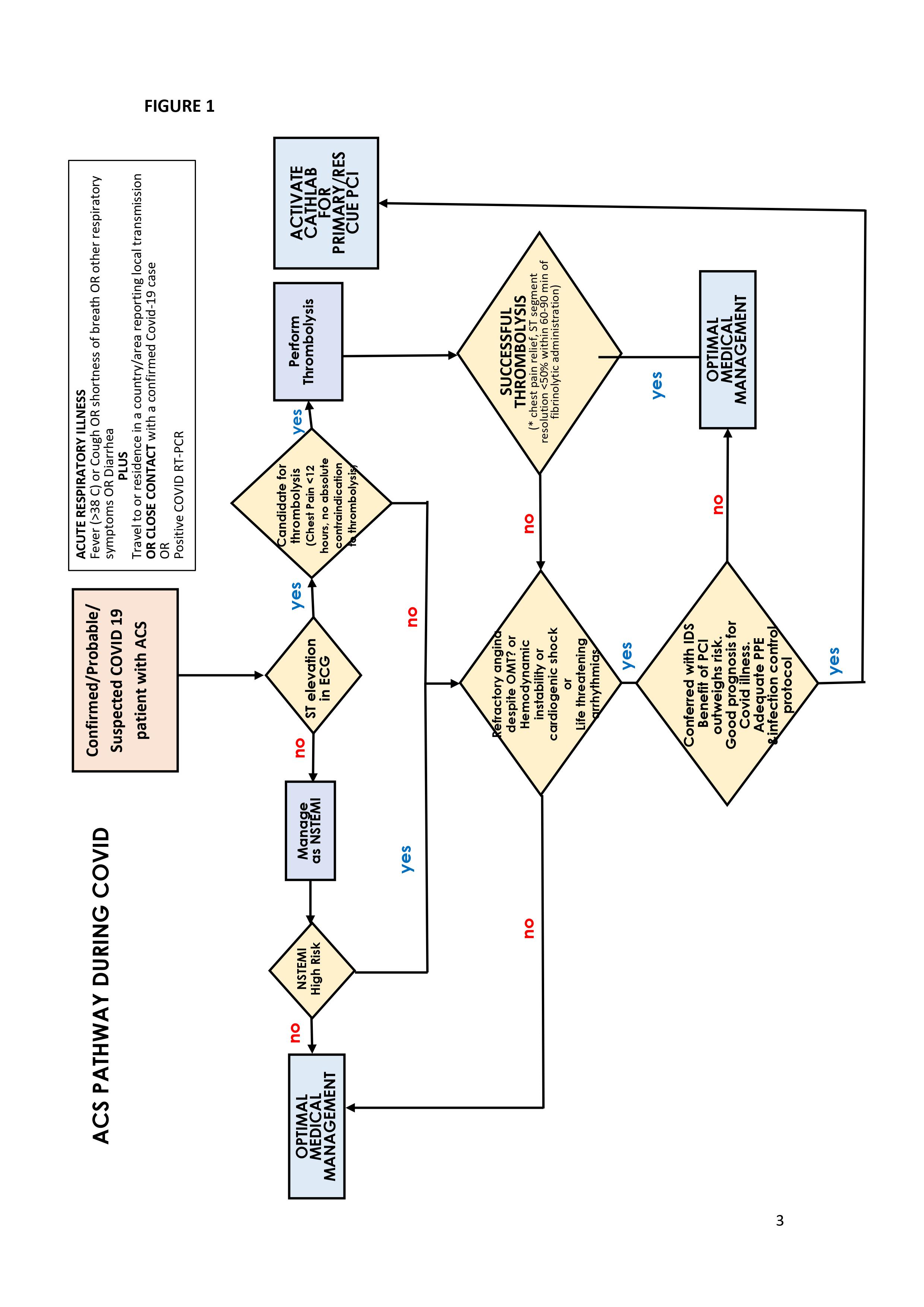
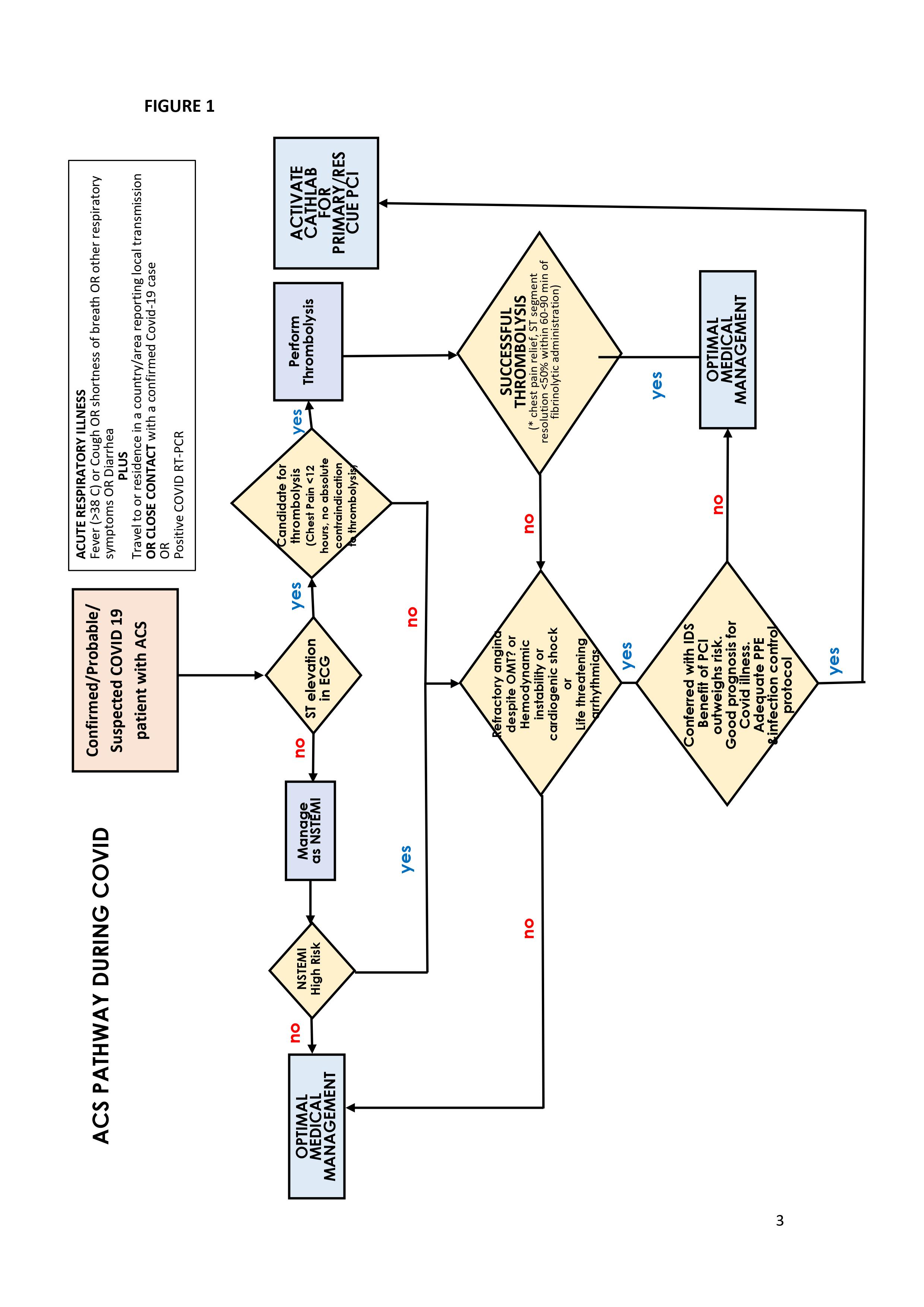
Although most clinical trials show that Primary PCI is the treatment of choice for STEMI, the current limitation in terms of rapid COVID 19 screening, availability of staff, ICU beds, and the risk of possible COVID 19 contamination of the catheterization laboratory may warrant the use      of      thrombolytic      therapy      in      appropriate      patients.                                                                                                                                                        Especially for Confirmed/Probable/Suspected COVID-19 patients with STEMI, thrombolytic therapy should be prioritized if they are stable and there are no contraindications. If an invasive treatment strategy is deemed necessary, we have to ensure that the patient will derive significant benefit from the procedure and that there is adequate infection control protocols and personal protective equipment to avoid infection of the cath lab staff and other patients. Below is a proposed algorithm for acute coronary syndrome. (Figure 1)

Non STEMI patients


Risk stratification is highly important for NSTEMI. Screening for COVID-19 infection in these cases should be performed prior to any procedure. For COVID-19 patients, maximal medical therapy is usually sufficient and only patients who are very high risk NSTEMI should be considered for an invasive intervention. In this case, discussion with the infectious disease specialist is recommended to ensure that the patient will benefit from the procedure and that the risk of infection for the staff and other patients can be minimized.


SUCCESSFUL THROMBOLYSIS

Personal Protective Equipment and Infection control in the Cath lab


It is prudent to consider all patients referred for emergency procedures at the cath lab as possible COVID-19 patients and appropriate care should be taken. All patients should wear a mask and all personnel inside the cath lab should wear level 3 or 4 PPE (Scrub suits, N95 mask or better, cap, googles or face shield, double gloves, dedicated footwear/booties, shoe cover, impermeable surgical gown or Hazmat suit (Coveralls). Only the minimum number of personnel should be in the cath lab to reduce the risk of infection and to save on PPE. All staff should undergo training on the proper donning and doffing technique for PPE. (See Appendix A)

Due to the risk of contamination during transport of COVID-19 patients, some procedures normally done in the cath lab (e.g. Central line Insertion, Arterial line, Temporary Pacemaker Insertion) should be done bedside, if possible, using alternative imaging modality like ultrasound.

After each procedure, the appropriate HICU approved disinfection procedure should be performed. Confirmed COVID-19 patients should be done in a dedicated cath lab if possible, if not, these patients should ideally be done last so a terminal disinfection procedure, including UV light disinfection can be performed.

Intubation and CPR in the cath lab


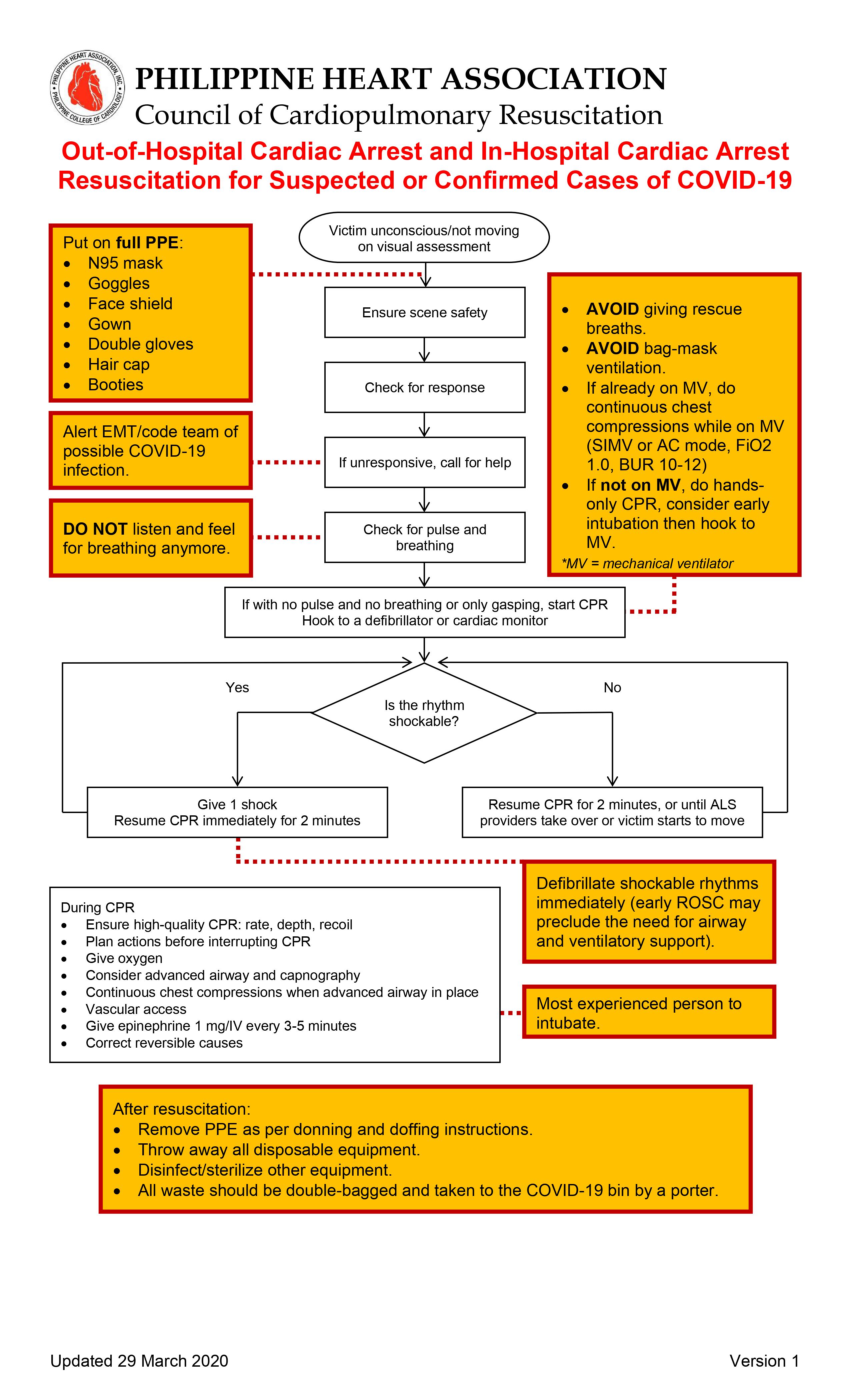
Endotracheal intubation, suctioning and active cardiopulmonary resuscitation are considered aerosol generating procedures and are thought to increase the risk of COVID-19 exposure to personnel. Therefore, COVID-19 patients who require, or will most likely require intubation, should be intubated before the patient is brought to the cath lab. It is also advisable that a specially trained team of anesthesiologist and respiratory therapist handle intubation of COVID-19 patients. Local and international guidelines specifically for COVID-19 patients undergoing CPR are available and can be accessed here (Appendix B). When all reasonable treatment options have been done, DNR option should be considered for COVID-19 patients with guarded or poor prognosis. Nonessential personnel should go out and the cath lab doors should be kept closed during these procedures.

Reference:


  1. Welt FGP, Shah PB, Aronow HD, Bortnick AE, Henry TD, Sherwood MW, Young MN, Davidson LJ, Kadavath S, Mahmud E, Kirtane AJ, from the American College of Cardiology’s (ACC) Interventional Council and the Society of Cardiovascular Angiography and Intervention (SCAI), Catheterization Laboratory Considerations During the Coronavirus (COVID-19) Pandemic: From ACC’s Interventional Council and


SCAI,     Journal      of      the     American      College     of      Cardiology      (2020),      doi: https://doi.org/10.1016/j.jacc.2020.03.021.

  1. Unified COVID 19 Algorithms, WHO, PSMID (https://www.psmid.org/unified-covid- 19-algorithms-1/)
  2. Acute Coronary Syndrome for Covid-19 Related Patients Guideline, St Luke’s Medical

Center

  1. Catheterization Laboratory Guidelines During COVID19 Pandemic, Philippine Heart Center
  2. Acute Coronary Syndrome Pathway During COVID Pandemic, UP-PGH Medical Center
  1. Infection Control Protocol in the Cardiac Catheterization Laboratory, UP-PGH Medical Center
  2. Philippine Heart Association              COVID              Resource             Center https://www.philheart.org/index.php/education/pha-covid-resource-center


Appendix A: Donning and Doffing of Personal Protective Devices


DONNING: https://drive.google.com/open?id=1eKNo8OwvKP0W6fAQ9edIqsXMuVaFHfnW

DOFFING:

https://drive.google.com/open?id=1NEKgOeSQWpt2Db977S0FM3-rKtNHrcNv

Image

FIND A CARDIOLOGIST